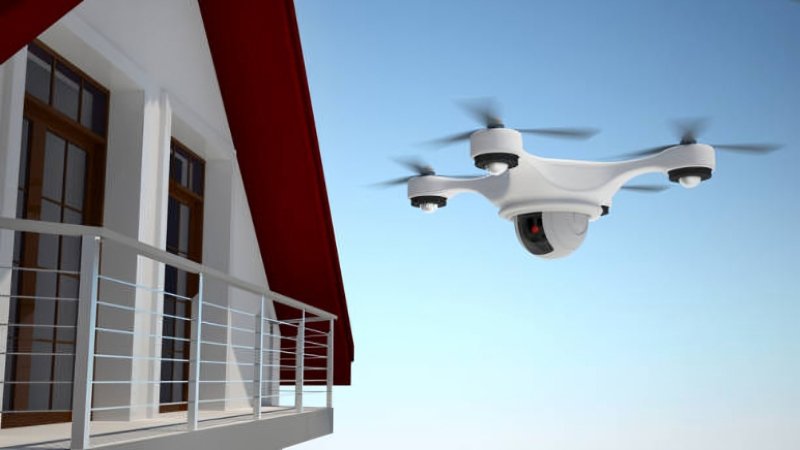
The scenario is becoming disturbingly common across the Sunshine State. You are enjoying a quiet Sunday afternoon when a neighbor calls to report seeing a drone hovering briefly over your property, or you spot a strange, hyper-detailed photo of your roof in your email inbox—sent by your insurance company.
For Florida homeowners, this is the new reality of the “aerial non-renewal.”
In a market defined by soaring premiums, carrier insolvency, and extreme weather, insurance providers have implemented a strategy of extreme risk mitigation. They are no longer waiting for a physical adjuster to walk your roof every few years. They are utilizing high-resolution satellite, airplane, and drone imagery to perform remote “instant inspections.”
This shift has created a silent, perpetual audit, where your roof’s visual condition is constantly being graded, often without your explicit knowledge, and the result can be the immediate cancellation or non-renewal of your policy.
The Algorithm’s Eye
Insurance companies aren’t employing pilots; they are employing algorithms. These systems are programmed to look for specific visual risk indicators that flag a roof as a high liability hazard. The homeowner’s primary focus is often on avoiding a leak; the insurer’s focus is on avoiding a claim.
The algorithms are trained to spot signs of perceived neglect, which translates directly into financial risk for the carrier.
The key red flags the software is hunting for include:
- Significant Granule Loss: On asphalt shingle roofs, the ceramic granules protect the underlying asphalt from UV degradation. If the image shows bald patches, it signals that the shingle’s lifespan is near its end, making it susceptible to wind damage.
- Biological Growth (Algae/Mold): Those notorious black streaks (Gloeocapsa magma) are not just an aesthetic issue. They are actively feeding on the limestone filler in the shingles and trapping moisture, which speeds up decay. Insurers view heavy biological growth as a sign of imminent moisture intrusion and structural rot.
- “Trampoline” Effect: Satellite imagery can sometimes detect the subtle waviness or sagging that indicates failed decking or a weakened support structure underneath, signaling a high vulnerability to wind uplift during a hurricane.
- Improper Repairs: The system can often flag mismatched, incorrectly layered, or visible repairs done by an unlicensed contractor, indicating a possible future failure point.
If the technology spots too many of these faults, the carrier bypasses the lengthy, expensive process of sending an adjuster. Instead, they send the dreaded non-renewal notice, essentially saying, “You have a high-risk liability, and we are withdrawing coverage.”
The 15-Year Cliff
Adding to the aerial anxiety is the infamous “15-Year Cliff.” Even if your roof looks pristine, many Florida carriers impose an arbitrary age cap, often dropping coverage when it hits 15 years old.
To bypass this rule, the insurer requires a specific document: the 4-Point Inspection. This is a detailed report covering the roof, HVAC, plumbing, and electrical systems. For the roof section, the inspector must estimate the remaining useful life (RUL) of the materials.
If the adjuster determines the roof has less than three to five years of RUL left, the homeowner is often forced into a difficult choice: pay for a full replacement immediately or risk losing coverage, thereby making the home uninsurable and virtually unsellable. The timing of the drone visit, therefore, can have massive financial consequences.
Taking Control of the Narrative
This new regime of remote oversight means homeowners must become proactive maintenance auditors of their properties. You can no longer afford to wait until a leak appears to address a problem. By the time a leak manifests, the damage is already severe and visible from space.
The solution is multi-faceted and centered on continuous, verifiable maintenance:
- Routine Cleaning: It is crucial to address biological growth (the black streaks) immediately with a manufacturer-approved soft-wash method. This is a non-destructive way to eliminate the bacteria that shorten the roof’s life and satisfy the algorithm’s aesthetic demands.
- Trim and Tidy: Keep tree limbs trimmed well away from the roofline. Overhanging branches drop debris (trapping moisture) and risk catastrophic impact during high winds. Insurance software often flags homes with heavy canopy coverage as higher risk.
- Document Everything: If you do have a repair or replacement, keep every invoice, permit, and warranty. If an insurer challenges the age or condition of your roof, verifiable paperwork is your only defense.
The days of ignoring the roof until it fails are over. The new reality of instant, remote inspection requires homeowners to treat the roof not just as a protective cover, but as a critical, high-value asset under constant financial scrutiny.
When seeking help navigating the complexities of hurricane and building codes, consulting reputable roofing services in Florida that specialize in both repair and preventative maintenance is the only sure way to keep your home protected and your insurance policy active.
Find more expert insights and breaking updates in our News category.