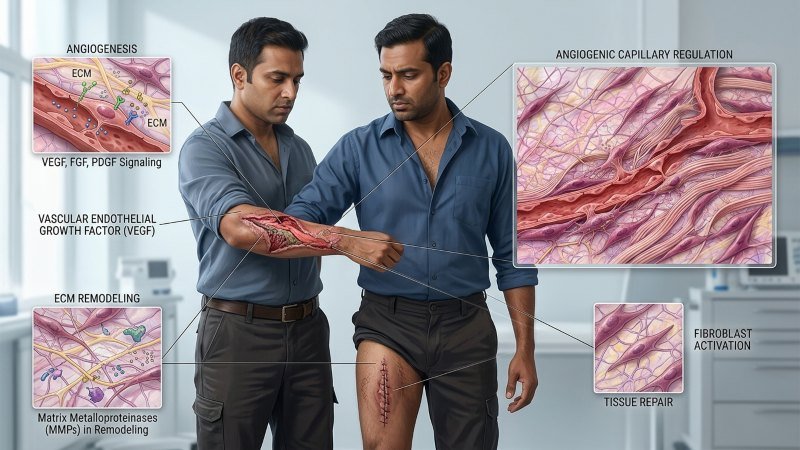
Understanding the molecular triggers that govern tissue regeneration is one of the most critical endeavors in modern physiological, cellular, and biochemical research. In the presence of acute tissue trauma, mechanical shearing, or chronic inflammatory degradation, the localized microenvironment experiences rapid cellular stress, microvascular disruption, and extracellular matrix degradation. To reverse these pathological states, biological systems rely on complex cell-signaling cascades that coordinate cell migration, mitogenesis, and neo-angiogenesis. Researchers investigating these physiological responses have turned their attention toward specialized synthetic peptides that mimic endogenous growth factors, cytoskeletal regulators, and cytoprotective agents.
In experimental laboratories, deploying high-purity preclinical tissue repair peptides has allowed investigators to isolate specific molecular cascades involved in tissue restoration. By evaluating how synthetic signaling molecules interact with endothelial receptors and connective tissue fibroblasts, researchers are establishing novel paradigms for musculoskeletal, dermal, and gastrointestinal wound-healing assays across multiple scientific disciplines.
Vascular Endothelial Dynamics and Capillary Formation
Neo-angiogenesis represents an essential prerequisite for structural tissue repair, as regenerating tissues require sustained perfusion to deliver oxygen, amino acids, and essential nutrients. The stable gastric pentadecapeptide BPC-157 has emerged as a key experimental compound in vascular biology due to its ability to modulate the vascular endothelial growth factor (VEGF) signaling pathway. In vitro studies demonstrate that BPC-157 promotes VEGFR2 activation and increases the expression of endothelial nitric oxide synthase (eNOS), ensuring microvascular vasodilation and endothelial cell survival under hypoxic conditions.
In conjunction with angiogenic factors, researchers study the role of thymosin beta-4 active fragments, commonly designated as TB-500. TB-500 exerts direct effects on vascular endothelial cell morphogenesis. Through its actin-sequestering properties, TB-500 accelerates the rate at which endothelial cells form capillary-like tube structures in three-dimensional matrix assays. The coordinated action of enhanced vascular signaling and accelerated cell motility provides a robust foundation for restoring microcirculation in damaged preclinical tissue models.
Fibroblast Activation and Type I Collagen Synthesis
Beyond vascular network formation, the restoration of mechanical tensile strength in repaired ligaments, tendons, and muscular tissues depends directly on fibroblast activity. Fibroblasts are the primary cellular architects responsible for synthesizing structural extracellular matrix proteins, including collagen types I and III, elastin, and proteoglycans. However, in poorly regulated repair cascades, excessive collagen type III deposition leads to aberrant fibrotic scarring, compromising tissue compliance and strength.
Preclinical models evaluating peptide administration have demonstrated a shift in extracellular matrix composition toward organized type I collagen bundles. This transition is mediated by the activation of key intracellular pathways, including focal adhesion kinase (FAK) and extracellular signal-regulated kinases (ERK1/2). By enhancing focal adhesion turnover, these peptides enable fibroblasts to align along mechanical stress vectors, producing mature collagen fibers with superior structural integrity and resilience under biomechanical stress.
In Vitro Inflammatory Resolution and Cytokine Attenuation
In addition to structural matrix synthesis, the resolution of localized inflammatory signals is required to transition tissue from acute trauma to regenerative maturation. Synthetic peptide sequences have demonstrated an ability to attenuate excessive tumor necrosis factor-alpha (TNF-alpha) and interleukin-1 beta (IL-1b) transcription in macrophage cultures. By modulating nuclear factor kappa B (NF-kB) nuclear translocation, these molecules foster a permissive microenvironment that favors tissue remodeling over chronic tissue destruction.
Quality Metrics in Laboratory Peptide Procurement
To ensure high reproducibility across preclinical experimental designs, scientific investigators must enforce rigorous standards for peptide sourcing and analytical validation. Lyophilized peptides must undergo thorough high-performance liquid chromatography (HPLC) and mass spectrometry (MS) characterization to confirm correct molecular weight, amino acid sequence fidelity, and the absence of residual scavenger reagents or truncated synthesis intermediates. Maintaining precise storage conditions, including desiccated storage at sub-zero temperatures, prevents peptide hydrolysis and guarantees the integrity of experimental assays for academic and biotechnology researchers alike.

Lucas is a writer at Magazine Outstanders, with 3 years of experience covering business, technology, health, and lifestyle topics. He specializes in turning complex ideas into clear, well-researched, and engaging articles that keep readers informed and inspired. Driven by curiosity and a passion for storytelling, Lucas strives to deliver content that is accurate, valuable, and easy to connect with.