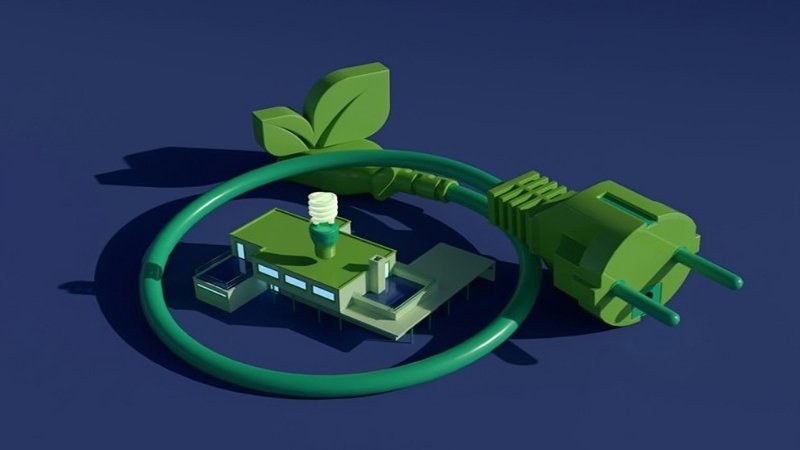
Homeowners play an outsized role in sustainable housing design. At first glance, it may appear disingenuous to suggest as much, but upon closer inspection, everything comes into sharp focus. When a buyer intends to anchor in the long term, this tends to justify the higher upfront costs associated with sustainable housing design.
Think of energy-efficient elements, environmentally friendly water purification, heating and cooling systems, etc. Traditional home designs are geared toward upfront affordability, while eco-friendly, sustainable elements are often (not always) fringe requests for a smaller contingent of buyers. As such, the attendant costs are higher. Long-term homeownership tends to reinforce the merits of these design elements.
The clincher: Over the long term, the upfront investment pays for itself in utility bill savings, environmental benefits, and utility value.
How Homeowners Pay for these Eco-Friendly Investments
The decision to go green is often driven by values and logic. The environment, peace of mind, and long-term cost savings come to mind. Traditional heating, cooling, and energy conservation systems are often expensive and reliant on existing power grid infrastructure. From systems, appliances, and ancillary components to household insulation, roofing, piping, and electrical systems, significant redesigns are possible for sustainable housing. Indeed, this arc covers the full spectrum, including the home’s layout.
From an affordability perspective, new homeowners can access a variety of legitimate programs, frameworks, and opportunities to achieve their long-term homeownership goals. Depending on the type of buyer, prospects may include the following:
- First-time homebuyers – As a new homeowner, there are various government-backed programs to help you secure a mortgage as affordably as possible.
- Military members and eligible family – Veterans home buying options are best served with VA loans issued through reputable lenders. Since VA loans are a unique benefit to veterans, service members, and eligible family members through the Department of Veterans Affairs, it’s a sensible, affordable, and exclusive option available to military members with a COE (Certificate of Eligibility). A key benefit of this program is the no-down-payment requirement. Given that a 20% down payment is typically required to avoid PMI, the cost savings on that alone can be used to finance significant sustainable housing upgrades, redesigns, or eco-friendly improvements.
- Energy efficiency and green mortgage programs – Several mortgage products enable homeowners to roll costs of energy-efficient upgrades into their home loans. This eliminates the upfront costs and spreads the eco-friendly upgrade expenses over the life of the mortgage.
- State programs – A wide variety of municipalities and states offer homeowners low-interest financing, tax credits, or even rebates on green energy systems. Think of solar panels and high-efficiency HVAC systems. Water purification elements and insulation are often prioritized by state and local authorities. Over time, these incentives reduce the upfront costs of sustainable living for long-term homeowners.
- Home equity lines and HELOCs – These apply to existing homeowners. Qualified individuals with equity in their property may be eligible for low-interest loans based on their existing investments. These funds can be used for any purpose, including paying for sustainable upgrades.
- Utility-backed financing options – Certain utility providers may offer financing to homeowners for a variety of approved upgrades. As such, homeowners can gradually repay the costs through their monthly bills at competitive rates.
- Builder and manufacturer financing solutions – A growing number of eco-focused builders and equipment manufacturers offer direct financing to lower the barriers to entry for eco-friendly systems and designs.
Why Long-Term Sustainable Ownership Stability?
Over the long term, owners feel justified in spending the additional capital to upgrade their property. Whether it’s geothermal heating, solar panels, or energy-efficient windows, each major upgrade needs to be justified. There is clearly a return on investment over time – something short-term ownership does not benefit from.
Equally important is the ongoing maintenance and improvement of systems, elements, and features. A long-term homeowner is naturally invested in the well-being of the home. There is no cost-cutting for short-term profit, a.k.a. house flipping, since the home is perceived as a strategic investment.
The utility value derived from long-term home ownership is a major driver of investment in eco-friendly systems. There is pride and purpose at play. A peripheral element to consider is the community aspect. A long-term homeowner tends to drop anchor and build deep roots within the neighbourhood and community.
This enhances the neighbourhood’s cohesiveness and fosters a local, eco-friendly community. Whenever aging in place becomes a reality of established communities, homes, and environments are built accordingly. This tends to foster resilience, with energy independence, flood mitigation, wind mitigation, and general longevity of the structure and systems.