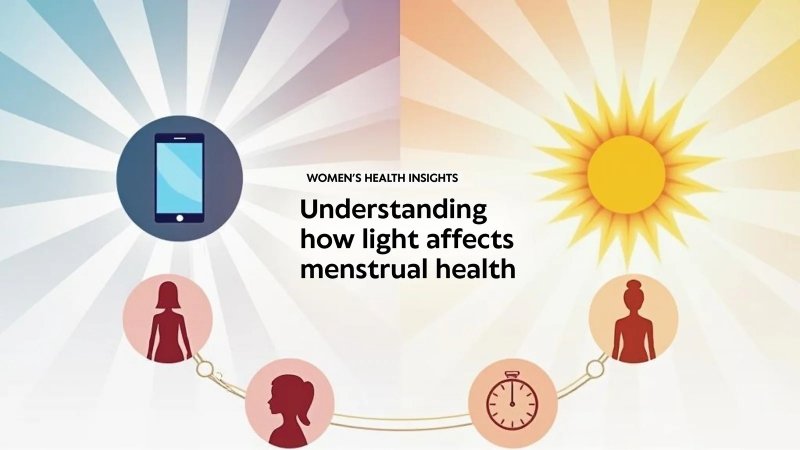
Your Monthly Cycle and the Light You Live In
The Quiet Struggle Many Women Do Not Talk About
“My cycle feels unpredictable.”
“I used to sleep well. Now I don’t.”
“Every month feels harder than the last.”
If any of these sound familiar, you are not alone.
Many women do everything they are told to do. They eat well. They exercise. They manage stress. And yet their bodies feel out of rhythm, month after month.
Here is something most women are never told. Your hormones may not be failing you at all. The real issue may be the light environment you live in.
Modern life surrounds us with artificial brightness. Screens late at night. Indoor lighting from morning to midnight. Mornings that begin with phone glow instead of sunlight.
It feels normal. But your biology interprets it very differently.
To your body, light is information. When that information arrives at the wrong time, hormonal rhythms begin to drift.
You are not broken. You are living under signals your body was never designed for.
The Two Biological Clocks That Shape Women’s Health
Most people are familiar with the circadian rhythm, the 24-hour clock that regulates sleep, energy, appetite, and metabolism.
Women also operate on a second clock: the infradian rhythm.
This longer rhythm spans roughly 28 days and governs the menstrual cycle, fertility, emotional shifts, and hormonal balance.
These two rhythms are not independent. They function like interlocking gears. When one falls out of sync, the other follows.
Light is the signal that keeps them aligned. Morning sunlight sets the tempo. Evening darkness allows the body to reset. When those cues disappear, both clocks lose their timing.
Even something as simple as consistent morning light can help reestablish communication between your daily and monthly rhythms.
When Light Sends the Wrong Message
Imagine a typical modern day.
You wake under artificial lighting. Spend most of your day indoors. End the evening scrolling on a screen or sitting under bright LEDs.
To your brain, light equals daytime. And when your body receives that signal late into the night, hormone production becomes confused.
A large 2023 review following nearly 200,000 women found that those exposed to irregular light schedules experienced significantly higher rates of cycle irregularity, more painful periods, and earlier menopause.
This is not coincidence. It is biology responding to disrupted timing cues.
How Morning Light Shapes Hormonal Balance
Morning sunlight plays a critical role in hormone production.
When light enters the eyes early in the day, it signals the brain to produce cortisol in a healthy, natural rhythm. Cortisol is made from pregnenolone, often referred to as the “mother hormone.”
Under balanced conditions, pregnenolone is shared between cortisol and reproductive hormones like estrogen and progesterone.
But when light exposure is mistimed, especially when evenings remain bright, the body interprets this as ongoing stress. Pregnenolone is diverted toward cortisol production, leaving less available for reproductive hormones.
Over time, this can show up as cycle irregularity, increased PMS, anxiety, fatigue, and changes in skin and metabolism.
Your body is not malfunctioning. It is responding protectively to what it perceives as an unsafe environment.
When the Hormonal System Loses Its Flow
Decades ago, German researcher Fritz Hollwich demonstrated that artificial blue light increased cortisol and ACTH, both stress hormones. He showed that the body reacts to light as if it carries emotional meaning.
Modern research has confirmed this. Chronic exposure to harsh, unbalanced lighting activates stress pathways and drains reproductive energy.
For women, this often appears as heavier or irregular periods, intensified PMS, mood swings, anxiety, or early signs of perimenopause.
Estrogen and progesterone normally support metabolic health, liver function, and blood sugar balance. When circadian timing breaks down, those protective effects weaken much earlier than expected.
Many women feel as if they are aging faster than they should. In reality, their internal timing has simply lost its rhythm.
Menopause and the Role of Light
Menopause is not meant to feel abrupt or overwhelming.
In a well-supported body, the transition is gradual. As ovarian hormone production slows, the adrenal glands take on a greater role.
That handoff only works when stress levels are low.
Chronic artificial light exposure raises cortisol, placing excessive demand on the adrenals. When that system is overworked, it cannot provide enough hormonal support to smooth the transition.
A long-term study following more than 80,000 nurses found that women exposed to chronic circadian disruption entered menopause earlier, particularly those under the age of 45.
This is not early decline. It is adaptation to an unnatural environment.
A Gentle Light Reset for Hormonal Support
Supporting hormonal health does not require extreme measures. Small, consistent shifts in how you interact with light can restore rhythm.
Morning grounding
Step outside shortly after waking. Aim for 15 to 30 minutes of natural daylight without sunglasses or windows. This sets cortisol, serotonin, and melatonin timing for the entire day.
Cycle-aware evenings
During the luteal phase, evenings matter even more. Use warm lighting under 3000K and reduce bright exposure to support progesterone production.
Midlife support
For perimenopause and menopause, follow natural timing. Earlier nights, gentle mornings, and delayed screen exposure help reduce adrenal strain.
Evening sanctuary
Dim lights two hours before bed. When screens are unavoidable, wear VivaRays® 3-in-1 Light Optimization Glasses to block blue and green wavelengths that suppress melatonin, allowing your body to enter nighttime mode naturally.
Stress buffering
Pair light hygiene with calming rituals such as deep breathing, soft music, or a warm herbal tea. Each signal reinforces safety, and safe bodies heal.
Light Matters at Every Stage of Life
During reproductive years, morning sunlight supports ovulation stability and emotional balance.
During perimenopause, protecting evening darkness improves sleep and progesterone signaling.
During menopause, consistent light rhythms help stabilize metabolism and energy.
Your body does not need perfection. It needs rhythm.
You Are Not Broken. You Are Out of Sync.
Your biology still knows exactly what to do. It has followed sunlight and darkness for millions of years.
You do not need to fix yourself. You need to remind your body what morning feels like and what night truly means.
Start small. Open the curtains tomorrow morning. Let natural light reach your eyes.
That single moment begins restoring the rhythm your body has been waiting for.
To explore more about light and women’s health, visit VivaRays and discover tools and guidance designed to support the rhythm your body was built for.

Lucas is a writer at Magazine Outstanders, with 3 years of experience covering business, technology, health, and lifestyle topics. He specializes in turning complex ideas into clear, well-researched, and engaging articles that keep readers informed and inspired. Driven by curiosity and a passion for storytelling, Lucas strives to deliver content that is accurate, valuable, and easy to connect with.