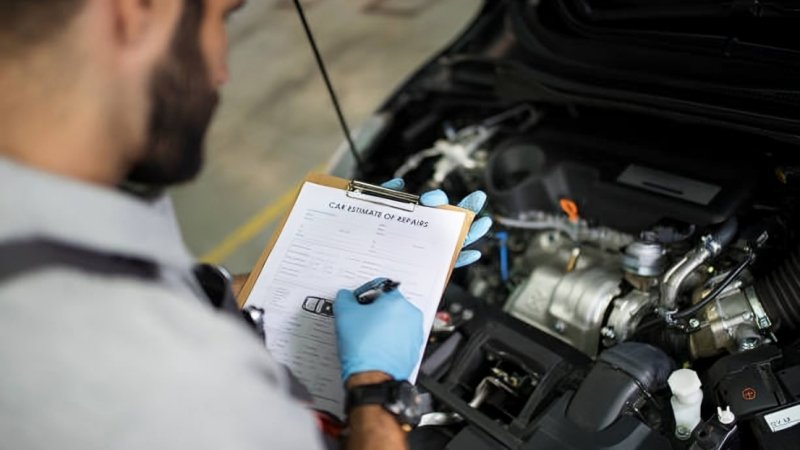
When you are just about out of coverage under the manufacturer’s warranty and you hear a rattle that your car shouldn’t be making, time is not on your side. Dealerships often know that too, and some use it to their advantage. Here’s how to protect yourself before that window closes.
Start the Paperwork Trail Now
The most important action you can take is to bring your vehicle to an authorized dealership service department as soon as an issue arises, even if that problem seems minor, or if it only occurs on a few occasions. An intermittent rattle or a transmission that slips once in a while still must be diagnosed and officially documented before you exceed your warranty’s mileage or time limit.
This is for legal reasons and falls under the pre-existing condition stipulation. As long as the defect was recorded before your warranty expired, the manufacturer must still remedy the situation, even if the actual repair work continues past the expiration date. They can’t just wait out the warranty on a problem that has already been entered into their system. Your job is to ensure that it gets entered.
Don’t call the service department and describe the problem over the phone without going in. Visit the dealership, explain the issue to the service advisor, and ensure that a repair order is created that day.
The Repair Order is Your Most Important Document
The repair order, often referred to as an RO, documents your complaint and the dealer’s actions. If the case ever goes to court, this piece of paper is where the lawyers will look first. Sometimes, service writers use imprecise language to give themselves cover so they can mark “Couldn’t duplicate” without being caught in a direct lie. That’s why you need your exact words written on the repair order.
For example, “Transmission slips when accelerating from a stop” is specific and verifiable. “Customer reports hesitation” is not. If you’re working with a lemon law attorney in New York down the road, having your precise complaint on the RO makes a huge difference. Read the repair order before you sign or accept it. If the complaint description doesn’t match what you told them, ask them to rewrite it. This isn’t being difficult, it’s protecting your legal record.
Research Technical Service Bulletins Before Your Appointment
Before your last warranty visit, take 20 minutes to get online and look up Technical Service Bulletins for your exact make, model, and model year. TSBs are the official communications from the manufacturers to their dealership mechanics about known defects, and the approved repairs for them.
If your vehicle has a TSB that matches the problem you’re experiencing, print a copy and bring it with you. When a known defect with repair procedures already documented is present, it’s a lot harder for a dealer to claim the problem was your fault or that they couldn’t duplicate it. And if you force their hand to make the repair during the warranty window, they aren’t going to put it off.
It’s also worth checking the NHTSA’s public complaint and recall database. If people are taking the time to write in with similar problems about the same vehicle it can only help.
Know What the Dealer Stalling Tactic Looks Like
One of the most common things entered in service department computers when a vehicle on its last legs of warranty comes in with a problem is “Cannot duplicate the issue.” The dealership knows this will officially close out the work order, leave the defect unresolved, and ideally buy the automaker or itself more time for the warranty calendar to run out. If this happens to you, don’t just lay there and accept it.
Instead, return a second time, at the very least, and describe the conditions under which the problem occurs in as much detail as possible, speed, temperature, load, time of day. Insist they put it in writing, which is best accomplished by obtaining a completed repair order that states “cannot duplicate” and then noting the date, mileage, and the circumstances of the latest breakdown in as much detail as you can on it before the ink dries. Then schedule your next visit.
After multiple failed repair attempts, you may have more protection than you realize. Under consumer protection laws, a vehicle that can’t be fixed after a certain number of attempts, typically three to four, may qualify as a lemon regardless of whether the bumper-to-bumper warranty is still active. In New York specifically, a vehicle is legally presumed to be a lemon if the manufacturer or authorized dealer has been unable to repair the same defect after four or more attempts, or if the vehicle has been out of service for a cumulative total of 30 or more days within the first 18,000 miles or two years of delivery.
After the Warranty Expires, You Still Have Options
A bumper-to-bumper warranty usually covers most parts for three years or 36,000 miles. But when the factory warranty ends, a powertrain warranty, which is less comprehensive, often continues to cover the engine, transmission, and drivetrain for five years or 60,000 miles, sometimes more.
The Magnuson-Moss Warranty Act is a federal consumer protection law that also provides remedies when manufacturers engage in deceptive warranty practices or fail to honor coverage obligations. Vehicle warranties can’t force you to repair at the dealer or use their parts to maintain coverage unless those repairs or parts are free.
Some manufacturers will also offer goodwill repairs shortly after coverage ends to maintain customer relationships. This isn’t guaranteed, but if you have a documented repair history and a clean service record, it’s worth asking directly, and asking in writing.
The main thing is not to let the expiration date convince you that your options disappear with it. Documented defects, persistent repair failures, and the legal thresholds built into consumer protection law can all work in your favor well after the warranty card in your glove box has technically expired.

Lucas is a writer at Magazine Outstanders, with 3 years of experience covering business, technology, health, and lifestyle topics. He specializes in turning complex ideas into clear, well-researched, and engaging articles that keep readers informed and inspired. Driven by curiosity and a passion for storytelling, Lucas strives to deliver content that is accurate, valuable, and easy to connect with.