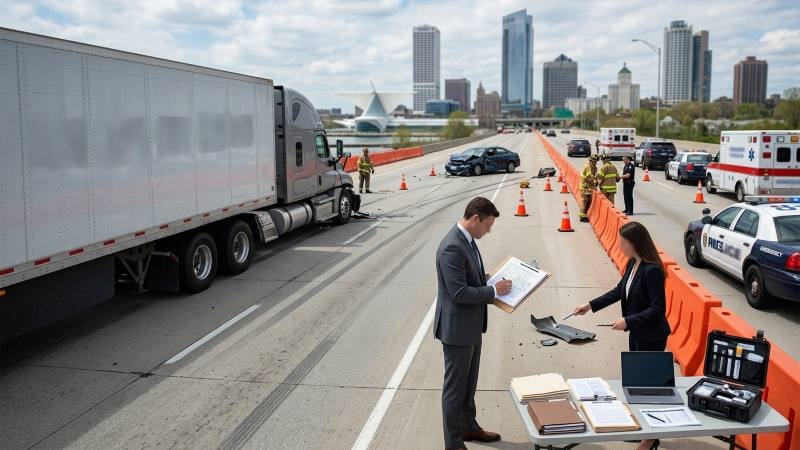
Milwaukee is a major Wisconsin community where busy city streets, regional routes, and commercial transportation all converge, bringing passenger vehicles and large trucks into close contact every day. While most trips happen without incident, the consequences can be considerably different when a commercial truck is involved in a serious collision. The legal questions that follow may extend beyond the actions of the people directly involved, particularly when the circumstances surrounding the vehicle, its operation, and the business behind it become relevant. Truck crashes can also create a more demanding claims process because the available evidence, legal obligations, and potential financial consequences may be broader than those associated with an ordinary car accident.
For an injured person already dealing with disruption and uncertainty, understanding these differences can be critical to making informed decisions about a potential claim. Working with a Milwaukee truck accident lawyer can help bring structure to these complexities and ensure important aspects of the case receive appropriate attention.
Several Parties May Share Responsibility
A car crash usually involves two drivers and their insurance companies. A truck collision can involve the truck driver, the carrier, a leasing company, a maintenance contractor, a cargo loader, or a vehicle manufacturer. Responsibility depends on what caused the crash. A driver may have violated traffic rules, driven while fatigued, or failed to inspect the vehicle. A trucking company may have ignored maintenance problems, hired an unqualified driver, or pressured a driver to meet an unsafe delivery schedule.
Federal Rules Add Another Layer
Commercial trucking operates under Federal Motor Carrier Safety Administration rules. These requirements address driver hours, vehicle inspections, maintenance, alcohol and drug testing, cargo securement, and other safety duties. A violation does not automatically prove liability. However, it can provide evidence that a driver or a company failed to comply with an applicable safety requirement. The claim must still connect the violation to the crash and the resulting injuries.
Evidence Can Disappear Quickly
Trucking companies and their insurers often begin investigating soon after a collision. They may inspect the truck, photograph the scene, interview witnesses, and secure electronic records before an injured person understands the claim’s full value. Important evidence includes the truck’s event data, dashboard camera footage, GPS information, phone records, maintenance documents, and driver qualification files. Some systems preserve data for limited periods or overwrite older files. A formal preservation request can tell the trucking company to retain evidence related to the crash. Without prompt action, useful records may become harder to obtain. Physical evidence also matters, including damaged vehicles, tire marks, cargo, and roadway conditions.
Injuries Often Create Larger Damages
Large trucks weigh far more than passenger vehicles. Their size and force can cause traumatic brain injuries, spinal cord damage, fractures, amputations, internal injuries, and death. Severe injuries affect more than current medical bills. A claim may include emergency care, surgery, rehabilitation, medication, assistive equipment, lost income, reduced earning ability, and future treatment. Family members may also face transportation costs, home modifications, and changes in caregiving needs.
Insurance Coverage Is Usually Larger
Commercial trucks often carry higher insurance limits than personal vehicles. Larger coverage can increase the amount at stake, but it also brings more intensive claim handling. Insurance adjusters may contact an injured person quickly and request a recorded statement, medical authorization, or settlement agreement. Those documents can affect the claim before the full extent of the injuries becomes clear. A settlement check also ends the claim. Once an injured person signs a release, additional compensation usually cannot be requested for later medical problems or lost income. Careful review matters before accepting payment or making statements about fault.
What Should Injured People Do After a Crash?
Medical care should come first, even when symptoms seem manageable. Some injuries develop hours or days after a high-impact collision. An injured person should preserve photographs, keep medical records, save receipts, identify witnesses, and avoid posting about the crash online. Statements to the trucking company or insurer should be made only after legal advice is obtained.
Conclusion
Truck accident claims are harder because they combine serious injuries with multiple defendants, federal safety rules, extensive records, and aggressive insurance investigations. The practical next step is to seek medical care, preserve crash information, and avoid signing documents before the claim is fully reviewed. Early legal assistance can preserve evidence and identify sources of compensation that a standard car crash investigation often fails to examine. That preparation helps prevent avoidable mistakes during settlement discussions.

Lucas is a writer at Magazine Outstanders, with 3 years of experience covering business, technology, health, and lifestyle topics. He specializes in turning complex ideas into clear, well-researched, and engaging articles that keep readers informed and inspired. Driven by curiosity and a passion for storytelling, Lucas strives to deliver content that is accurate, valuable, and easy to connect with.